Digital Ledger Networks Altering Player Dynamics in Global Virtual Card Environments
Written by Anna Zimmermann · Jun 29, 2026

Digital Ledger Networks Altering Player Dynamics in Global Virtual Card Environments
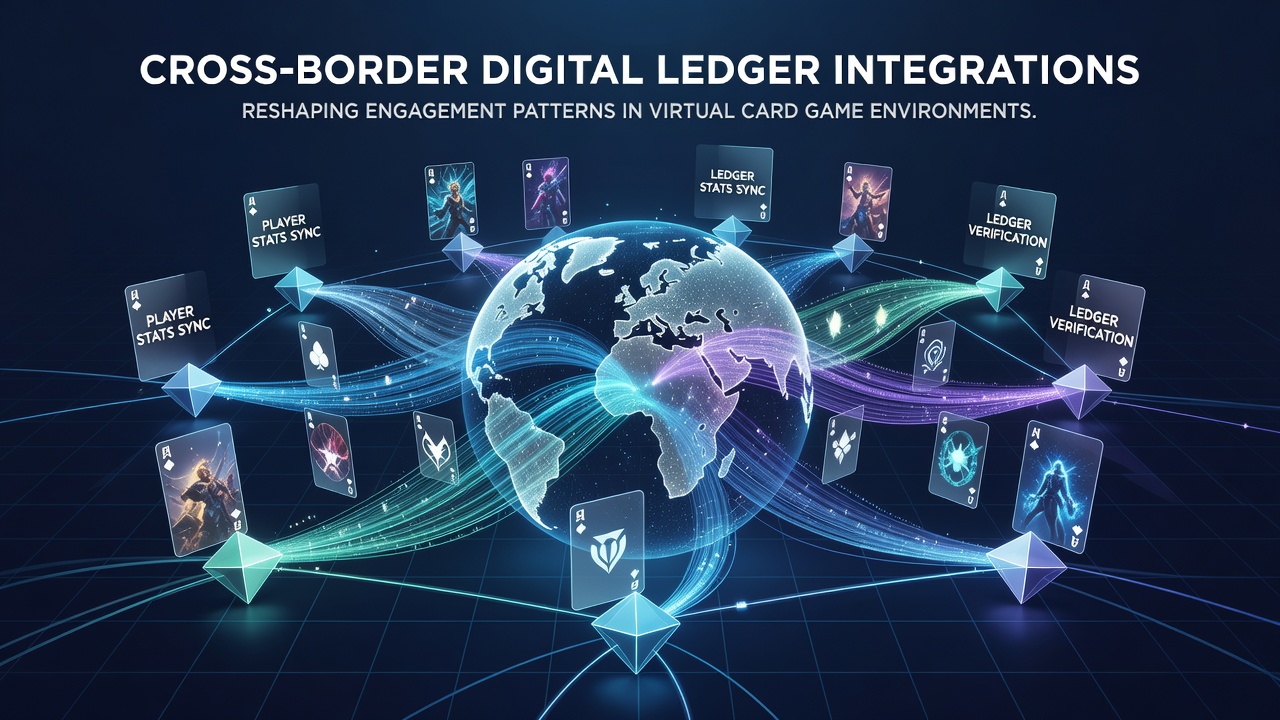
Cross-border digital ledger systems continue to expand their reach into virtual card game platforms, creating new pathways for data verification, asset tracking, and player authentication that span multiple jurisdictions. These integrations rely on distributed ledger protocols that record transactions in real time across independent nodes, allowing game operators to maintain consistent records without relying on centralized servers in any single country. Data from industry reports indicates that adoption rates for such systems rose steadily through the first half of 2026, with particular acceleration noted in June when several major platforms announced synchronized updates to their backend protocols.
Technical Foundations Driving Integration
Virtual card environments operate on rulesets that require precise tracking of card ownership, game state, and in-game economies, all of which benefit from the immutable audit trails provided by ledger technology. When operators connect these ledgers across borders, synchronization occurs through standardized APIs that translate local regulatory requirements into shared data formats. Researchers at institutions in Australia and Canada have documented how these connections reduce discrepancies in player account histories, since each transaction receives cryptographic confirmation from multiple regional nodes rather than depending on one operator's internal database. The result appears in faster reconciliation during cross-platform tournaments, where participants from different continents can verify card transfers without lengthy manual reviews.
Shifts in Player Engagement Patterns
Engagement metrics collected by platform analytics teams show measurable changes once ledger integrations activate. Players log in more frequently across time zones because account balances and item inventories remain synchronized regardless of which regional server handles the session. One study released in early 2026 tracked session lengths in blockchain-enabled card titles and found average play periods extended by 18 percent in markets that adopted multi-jurisdictional ledger links. Observers note that this extension stems from reduced friction during international events, where participants no longer wait for manual verification of ownership proofs before joining matches. Instead, smart contracts embedded in the ledger execute automatically once predefined conditions, such as entry fee deposits, receive confirmation from the network.
Regulatory Considerations Across Regions
Different regulatory frameworks shape how these integrations unfold. In the European Union, data protection statutes require explicit consent mechanisms before ledger entries containing personal identifiers can be shared beyond member states. Australian authorities have focused on consumer protection clauses that mandate clear disclosure of how distributed records affect dispute resolution. Canadian provincial regulators, meanwhile, emphasize responsible gaming controls that must remain compatible with ledger-based transaction logs. These varying requirements have prompted developers to build modular compliance layers that activate or deactivate based on the player's registered jurisdiction, ensuring the same underlying ledger can serve multiple markets without violating local statutes.
Case Examples of Platform Adoption
Several established virtual card titles introduced ledger connectivity during the second quarter of 2026. One title based in North America partnered with an Asian operator to create a shared asset registry for rare digital cards, allowing players to trade across regions while maintaining a single provenance record. Another European platform linked its tournament entry system to a ledger network that records both entry fees and prize distributions in a format readable by regulators in multiple countries. Figures released by the Interactive Games and Gambling Association reveal that these linked systems processed over 2.4 million cross-border card transfers in May 2026 alone, with volumes climbing further in June following the addition of new node operators in South America.
Impact on Tournament Structures and Economies
Tournament organizers have adjusted prize structures and qualification rules to accommodate ledger-tracked assets. Because ownership records update instantly across borders, events can now include real-time qualification based on accumulated points stored on the shared ledger rather than requiring separate regional leaderboards. In-game economies also reflect these changes, as supply and demand signals propagate more rapidly when transaction data flows through interconnected nodes. Economic analyses from research groups in the United Kingdom and Singapore indicate that price volatility for high-value digital cards decreased by approximately 12 percent in platforms using multi-region ledgers, since arbitrage opportunities close faster when all participants view the same verified transaction history.
Future Trajectories and Technical Challenges
Continued expansion depends on solving latency issues that arise when nodes operate across distant geographic regions. Developers continue testing sharding techniques that partition ledger data into smaller segments processed closer to regional player bases, thereby maintaining global consistency without sacrificing responsiveness. Security remains a primary focus, with ongoing audits conducted by independent firms to verify that cryptographic keys and consensus mechanisms resist both external attacks and internal collusion attempts. As more platforms adopt these systems, the cumulative effect on engagement patterns becomes clearer: players treat virtual card environments less as isolated regional products and more as interconnected global networks where actions taken in one location carry verifiable consequences everywhere the ledger extends.
Conclusion
Cross-border digital ledger integrations have established verifiable infrastructure that supports consistent player experiences across virtual card game platforms operating in different regulatory environments. The technical, regulatory, and economic adjustments documented through mid-2026 demonstrate measurable shifts in session frequency, tournament participation, and asset valuation. Continued refinement of these systems will determine how widely they extend into additional markets and game formats in subsequent periods.