Legacy Table Games Transition to Mobile: Integration Patterns Across International Gaming Networks
Written by Mara Schmidt · Jul 24, 2026
Legacy Table Games Transition to Mobile: Integration Patterns Across International Gaming Networks
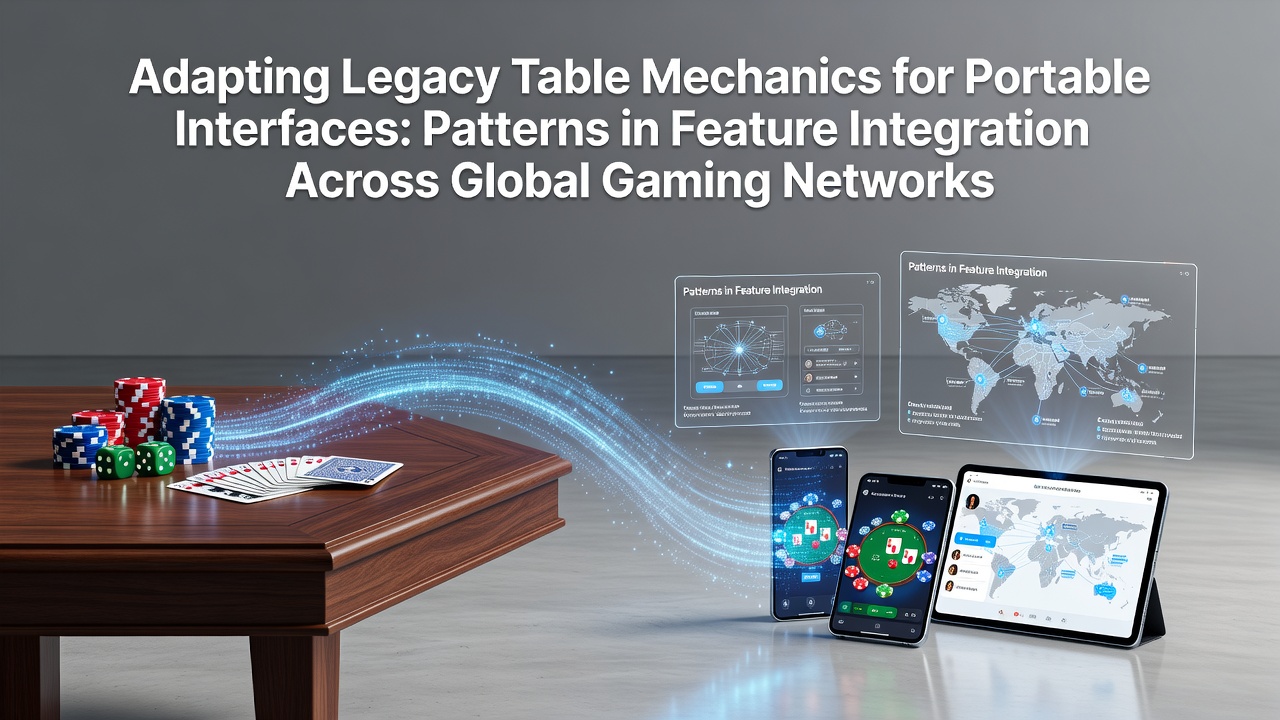
Traditional table games such as blackjack, roulette, and baccarat have long relied on physical components including felt layouts, physical cards, and dealer interactions, yet gaming networks worldwide continue to adapt these mechanics for portable interfaces through consistent feature patterns that maintain core rules while accommodating touch-based inputs and network connectivity.
Core Mechanics and Mobile Constraints
Design teams at major operators map legacy elements like card shuffling sequences and betting rounds onto digital frameworks that use swipe gestures for card handling and tap inputs for chip placement, according to industry reports from the International Association of Gaming Regulators. Data from 2025 deployment logs shows operators preserving payout ratios and probability structures even as interfaces shift from fixed camera angles to responsive views that adjust for screen orientation and device size.
Feature integration follows recurring patterns where real-time multiplayer synchronization appears alongside single-player modes, allowing users in different regions to join shared tables without altering house edges or game flow. Observers note that latency compensation algorithms often mirror those developed for online poker networks, ensuring that card reveals and bet resolutions occur in synchronized windows across devices.
Regional Variations in Feature Rollouts
European operators have prioritized integration of live dealer overlays with legacy rule sets, embedding video streams that replicate physical table perspectives while adding mobile-specific tools such as quick-bet sliders and session timers. In contrast, Asian markets have emphasized progressive jackpot linkages that connect mobile table sessions to broader network pools, with July 2026 data from Singapore's Casino Regulatory Authority indicating a 14 percent rise in cross-device participation following interface updates.
North American platforms show stronger adoption of skill-based bonus rounds grafted onto classic table structures, where players complete mini-challenges during natural pauses in play such as between roulette spins or after blackjack hands. These additions draw from patterns first tested in slot networks, yet they retain strict separation between base game mathematics and bonus outcomes to comply with jurisdictional standards.

Technical Patterns in Network Connectivity
Global gaming networks rely on standardized APIs that translate legacy table states into portable formats, enabling operators to push rule updates across multiple jurisdictions simultaneously. Research from the University of Nevada's International Gaming Institute documents how these APIs handle edge cases such as dealer errors or connection drops by restoring game states from server logs rather than local device memory, a practice that reduces disputes in mobile environments.
Payment and session management features integrate through unified wallets that track table activity alongside other game types, creating seamless transitions when users move from portable table interfaces to slot or sports sections within the same application. Figures released in mid-2026 reveal that networks incorporating unified session tokens experienced fewer account reconciliation issues during peak usage periods compared with fragmented systems.
Regulatory Influences on Integration Choices
Regulatory bodies in Canada and Australia have required explicit documentation of how mobile adaptations preserve game integrity, prompting operators to publish interface specifications that detail gesture mappings and random number generator certifications. These requirements have produced shared libraries of certified components that multiple operators reuse, accelerating deployment timelines across regions.
Security protocols adapted from legacy table surveillance standards now include device fingerprinting and behavioral analytics that flag unusual betting patterns during mobile sessions, while still permitting standard play sequences that would be familiar to anyone experienced with physical tables.
Conclusion
Patterns emerging from these adaptations demonstrate that operators consistently retain foundational mechanics of legacy table games while layering portable-specific capabilities such as gesture controls, network synchronization, and cross-device wallet functions. Continued monitoring through 2026 and beyond will show whether these integration approaches stabilize into industry-wide standards or evolve further as device capabilities advance.